
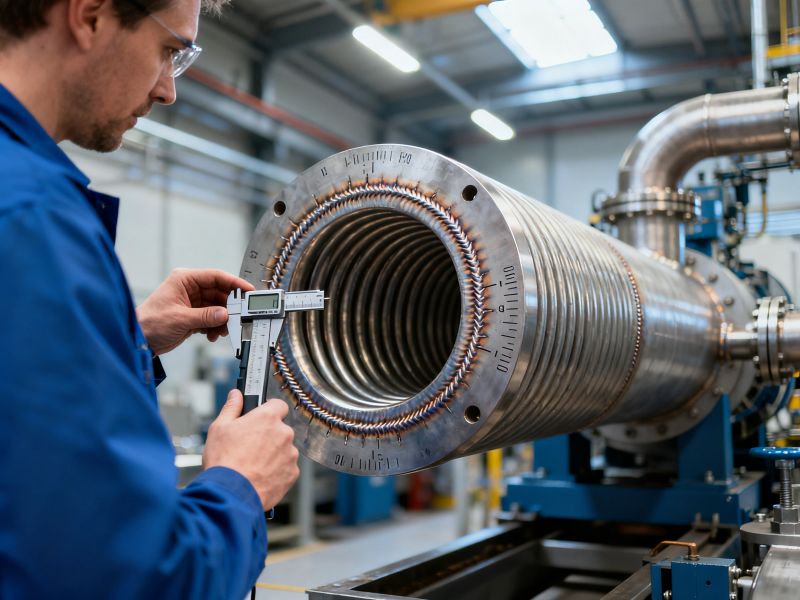
Rheinkel doesn't chase headlines. The company has been quietly shaping industrial heating and environmental technology since 1928, when Wilhelm Rheinkel opened a small workshop in Stuttgart. Walk through their current facility in Baden-Württemberg and you'll see the same obsessive attention to detail that defined the early years—only now it's applied to thermal oil systems, exhaust air purification, and custom heat exchangers that operate in some of Europe's most demanding manufacturing environments.What sets Rheinkel apart is a refusal to standardize for its own sake. I spoke with a plant manager at a Bavarian automotive supplier last spring who had replaced three competitors' units with a single Rheinkel thermal oil heater. "The others worked fine on paper," he told me, "but Rheinkel's engineers actually visited our floor, measured our load cycles。and modified the coil design before shipping." That kind of hands-on customization isn't marketing fluff—it's baked into their business model. Their order books show that over 60% of systems include at least one non-standard component, a figure that would terrify most CFOs but which Rheinkel's leadership views as a competitive moat.The company's environmental division tells a similar story. While larger conglomerates push off-the-shelf scrubbers, Rheinkel's exhaust air purification units are assembled around the specific chemical profile of each client's process. A recent installation at a printed circuit board manufacturer in Saxony reduced VOC emissions by 94%—not because the core technology was revolutionary, but because the inlet ducting, catalyst placement, and control logic were tuned to that plant's unique solvent mix. Rheinkel doesn't publish flashy sustainability reports;
they publish case studies with real numbers。often including the failures and adjustments that preceded the final result.There's a stubbornness to Rheinkel that feels almost anachronistic. They still manufacture key heat exchanger components in-house rather than outsourcing to lower-cost regions. Lead times run longer than competitors'—eight to ten weeks is typical—but their field service technicians are employees, not contractors, and they answer the phone. During a site visit last year, I watched a technician diagnose a thermocouple fault in under twenty minutes。pulling a replacement from the van because he'd anticipated the failure mode. That's not luck;it's institutional memory built over decades.None of this guarantees Rheinkel will dominate the next decade. The heating technology sector is consolidating, and private equity firms have been circling mid-sized German manufacturers with attractive margins. Rheinkel's ownership remains family-held, and the current managing director has publicly stated that selling to a financial buyer would undermine the engineering culture. Whether that stance holds under pressure is an open question. For now, though, Rheinkel serves as a reminder that industrial reputation isn't built on slogans—it's built on showing up。measuring twice, and standing behind the metal you weld.