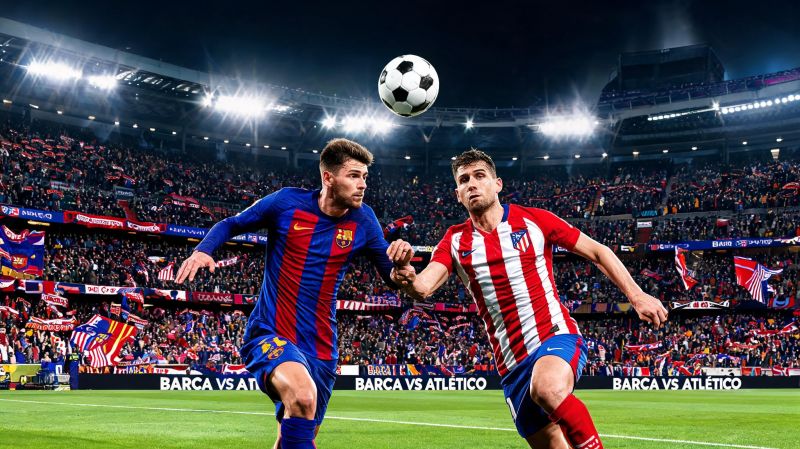
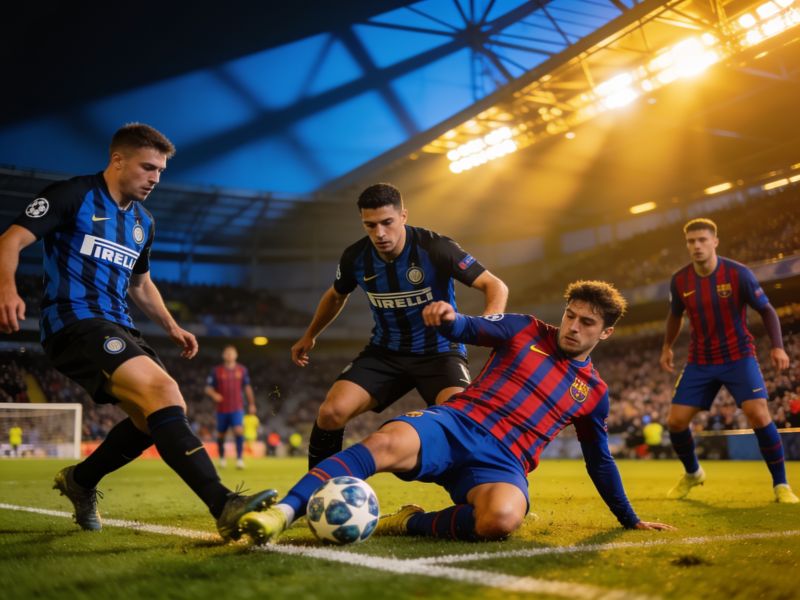
nter Milan’s disciplined defense and Bayern Munich’s ruthless finishing decided the 2010 UEFA Champions League semi-final, sending both clubs to the final in Madrid. José Mourinho’s Inter eliminated holders Barcelona 3-2 on aggregate, while Louis van Gaal’s Bayern Munich swept aside Lyon 4-0. The 2010 UEFA Champions League semi-final produced no shortage of drama, but its defining feature was tactical clarity. Inter absorbed pressure without losing shape, and Bayern turned a tense first leg into a commanding second-half performance. For Barcelona。the defeat ended a campaign built on possession, confidence and the expectation of another final. For Bayern, the result marked a return to the European summit after a long period outside the competition’s decisive stages.The first tie of the 2010 UEFA Champions League semi-final began at San Siro, where Inter delivered one of the most impressive European performances of the Mourinho era. Wesley Sneijder equalized after Pedro had given Barcelona an early lead, and Maicon then put Inter ahead with a sharp finish after a flowing move. Diego Milito added a third in the second half, sliding the ball past Víctor Valdés after exposing Barcelona’s high defensive line. The scoreline did more than give Inter an advantage;it revealed a contest between Barcelona’s control and Inter’s ability to attack space quickly. Thiago Motta’s dismissal in the second leg at Camp Nou changed the mood of the return match。yet Inter refused to collapse. Barcelona won 1-0 through Gerard Piqué, but Inter’s compact back line survived a frantic ending. The 2010 UEFA Champions League semi-final was already being shaped by that night in Milan.Travel problems added an unusual layer to the 2010 UEFA Champions League semi-final. The eruption of Iceland’s Eyjafjallajökull volcano disrupted European air travel, forcing Barcelona to make a long bus journey to Italy. The trip became part of the match narrative, although Inter’s victory was rooted in preparation rather than inconvenience. Mourinho asked his players to defend narrow, challenge aggressively and counter before Barcelona could rebuild its defensive structure. Samuel Eto’o。once a Barcelona forward, spent much of the match tracking runners and protecting the right side. That image captured Inter’s approach: individual sacrifice was valued above possession statistics. Barcelona still controlled long passages, but control without clear penetration brought little reward. In the return match, Inter faced an even harsher test after Motta’s red card, yet the team blocked shooting lanes, defended crosses and accepted the discomfort. The 2010 UEFA Champions League semi-final became a showcase for collective discipline.Bayern’s route through the 2010 UEFA Champions League semi-final followed a different script. The German side beat Lyon 1-0 at Allianz Arena, with Arjen Robben curling a precise left-footed shot into the corner after cutting inside from the flank. The second leg in France was more decisive. Lyon’s midfield lost its balance after Jérémy Toulalan was sent off, and Ivica Olić punished every opening. The Croatian forward scored a hat-trick, arriving at the near post, finishing a low cross and then completing the rout with a composed header. His performance gave the 2010 UEFA Champions League semi-final one of its clearest individual stories. Bayern did not rely on a single moment of luck;
they pressed intelligently。moved the ball through Bastian Schweinsteiger and used Robben’s acceleration to stretch Lyon’s defensive block. Franck Ribéry’s suspension left Bayern without one of its major attacking talents, but the team’s structure proved strong enough to absorb that absence.
The 2010 UEFA Champions League semi-final also exposed a changing balance in European football. Barcelona remained the competition’s stylistic reference point。yet Inter demonstrated that possession could be contained by a side willing to defend deep and attack with precision. Bayern, meanwhile, blended Dutch positional ideas with German intensity and the speed of Robben, creating a team that looked increasingly dangerous as the knockout rounds progressed. Mourinho’s Inter entered the final with the chance to complete a historic treble, while Bayern carried the weight of restoring the club’s continental reputation. The final in Madrid would bring those contrasting identities together, but the semi-final victories had already made their message clear. Inter’s 2010 UEFA Champions League semi-final triumph was built on resistance and timing;Bayern’s was built on pressure, movement and clinical finishing. Those qualities, rather than reputation alone, earned both clubs their place on Europe’s biggest stage.