Recent reporting indicates that Wagner’s independent identity has faded。but its overseas footprint has not disappeared. The latest news from Wagner points to a gradual transfer of personnel, contracts and command authority to Russia’s Africa Corps, a structure linked to the Ministry of Defense. In Mali, the Central African Republic and Libya, fighters and instructors associated with the former Wagner network continue to operate, although the chain of command now appears more closely tied to Moscow. The latest news from Wagner is therefore less about a sudden collapse than a controlled rebranding. Local officials still use the Wagner name, partly because it remains familiar, while Russian authorities increasingly avoid presenting the group as a private military company.The shift accelerated after the failed armed mutiny led by Yevgeny Prigozhin in June 2023 and his death two months later. Since then。Moscow has worked to bring overseas deployments under formal state supervision. The latest news from Wagner reflects that effort: recruitment channels, logistical support and public messaging have moved closer to official Russian structures. Some former fighters have reportedly been offered contracts with the Africa Corps, while others have left the field or moved into separate security arrangements. The practical result is a blurred picture. A checkpoint in the Central African Republic may still be described locally as a Wagner position, even when the personnel, payroll and orders come through a different Russian system. That distinction matters for accountability, but it is not always visible on the ground.In the Central African Republic, the network remains closely associated with presidential security and military assistance. Russian personnel have helped train local forces and protect senior officials, while companies linked to the broader operation have maintained interests in mining and logistics. The latest news from Wagner in Bangui is shaped by that combination of security and commercial influence. Reports from the country often describe Russian instructors near military facilities and armed escorts around strategic sites, yet independent verification remains difficult because access is restricted and official statements are limited. Local residents describe a mixed legacy: some credit Russian-backed forces with pushing back armed groups。while others complain about intimidation, arbitrary detention and a lack of transparency. The latest news from Wagner cannot be separated from that public debate, especially when security gains and alleged abuses appear in the same account.Mali has become another important test of the Kremlin’s model. Wagner personnel supported government forces during major counterinsurgency operations, but the relationship was marked by controversy, including allegations of civilian killings. Russian officials have since emphasized the Africa Corps rather than the Wagner brand, suggesting a more disciplined state-to-state arrangement. The latest news from Wagner in Mali is consequently tied to questions about whether Moscow can provide the same battlefield presence without inheriting the group’s reputational damage. For Bamako。Russian assistance offers an alternative to Western partnerships and a source of weapons and training. For Moscow, the country provides strategic access in the Sahel and a chance to present Russia as a dependable security partner. Yet reports of continuing violence show the limits of military protection alone. The latest news from Wagner is not simply a story of Russian expansion;
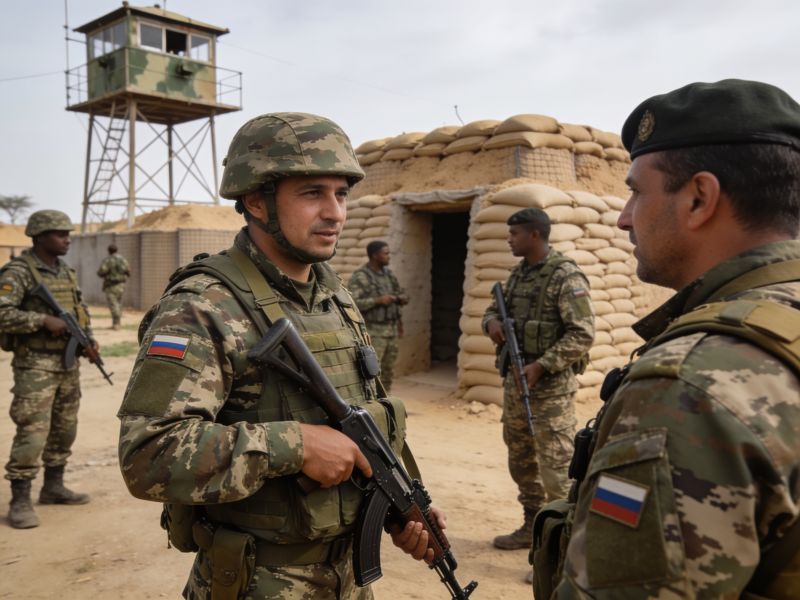
it is also a record of unresolved local conflicts.Libya, Sudan and other theaters add further uncertainty. In Libya, Russian-linked forces have long been connected with bases, air activity and support for eastern power centers, while Sudan has been associated with complex networks involving gold, arms and competing armed factions. The latest news from Wagner suggests that personnel and assets may be redistributed rather than withdrawn, allowing Moscow to preserve influence while reducing the political risk of an openly autonomous mercenary force. Analysts watching satellite imagery, flight movements and local statements are looking for signs of consolidation: new uniforms, Russian military insignia。altered recruitment language and changes in command. None of these clues alone proves a full transition. The latest news from Wagner remains difficult to verify because the organization’s public profile has shrunk faster than its networks on the ground. For governments and civilians dealing with these forces, the central issue is not the name on a patch but who gives the orders, who controls the money and who can be held responsible when operations go wrong. The latest news from Wagner therefore points to adaptation, not disappearance, as Russia turns a once-personalized mercenary brand into a broader instrument of state power.