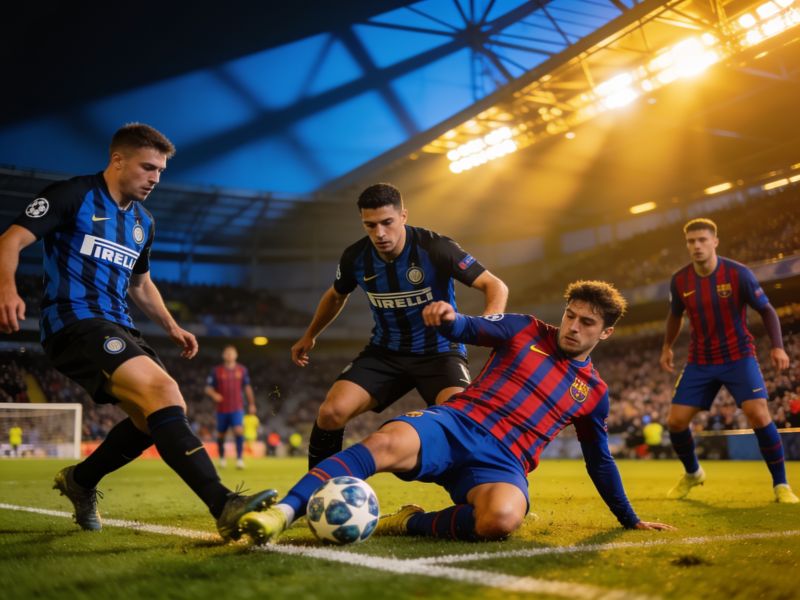
iverpool’s victory over Tottenham Hotspur in Madrid made the 2019 Champions League winner more than a line in a record book. It was a statement about patience, identity。and the strange emotional economy of elite football. The final itself was hardly a classic. Mohamed Salah scored from the penalty spot after barely two minutes, Divock Origi added a late second, and Tottenham spent much of the evening searching for the courage that had carried them past Manchester City and Ajax. Yet the 2019 Champions League winner felt convincing because Liverpool had already built its argument during the entire campaign. This was not a team that stumbled into glory;it was a side that had learned how to suffer without losing its shape.The most revealing evidence came in the semifinal against Barcelona. Liverpool lost 3–0 at Camp Nou, a scoreline that seemed to close the door. Barcelona had Lionel Messi, home advantage, and the psychological authority of a club accustomed to controlling European nights. Liverpool returned to Anfield without Roberto Firmino and Mohamed Salah, two of its most important attackers。
then produced a 4–0 comeback that still sounds fictional. That match explains why the 2019 Champions League winner deserves more credit than a simple final score can provide. The defining quality was not technical perfection. It was emotional aggression, the refusal to accept that the story had already been written. Klopp’s players pressed as if embarrassment could be converted into energy, and the crowd made every loose Barcelona touch feel like a public accusation.Calling Liverpool the 2019 Champions League winner also means recognizing how the club’s improvement was rooted in defensive trust. Virgil van Dijk did not merely win headers;he changed the mood of the entire back line. Alisson Becker offered calm when previous Liverpool goalkeepers had often invited panic. Trent Alexander-Arnold and Andrew Robertson played with the recklessness of wingers while still recovering quickly enough to protect their full-backs’ responsibilities. That balance gave the 2019 Champions League winner a distinctive rhythm: controlled danger rather than sterile possession. Liverpool did not need to dominate every minute. It needed to create pressure at the right moment, then strike before the opponent could breathe. Against Bayern Munich in the round of 16, that maturity was visible in a disciplined 3–1 away win, a performance built on composure rather than spectacle.There is also a reasonable criticism of the 2019 Champions League winner. Liverpool benefited from circumstances that cannot be separated from its achievement. Tottenham had played a dramatic semifinal only days earlier, and the final lacked the frantic intensity of Liverpool’s night against Barcelona. Some observers still argue that the match was decided by Salah’s early penalty。a harsh way to judge a European final. That criticism has merit, but it does not diminish the broader case. Champions League campaigns are not laboratory experiments conducted under equal conditions. Injuries, momentum, travel, refereeing decisions, and fear all shape the outcome. The 2019 Champions League winner understood those variables better than Tottenham did. Liverpool’s advantage was not simply superior talent;it was a stronger relationship with uncertainty.For me, the lasting importance of the 2019 Champions League winner lies in what happened after the medals were handed out. Liverpool had lost the previous final to Real Madrid and could have allowed that defeat to become part of its mythology. Instead, the players used it as a practical lesson: defend transitions better。trust the goalkeeper, keep the attack sharp, and arrive in the next final with less emotional noise. That is why the 2019 Champions League winner remains such a persuasive example of competitive growth. It did not represent flawless football, nor did it produce the most beautiful final. It represented a team becoming harder to break, harder to intimidate, and increasingly comfortable in the moments when matches turn chaotic. In modern European football, that may be the most valuable form of greatness.