
Wang Chuqin defeats Hugo to win the championship after a final shaped by sharp exchanges, sudden momentum swings and the Chinese star’s ability to stay composed when the pressure was highest. Facing Brazil’s Hugo Calderano, Wang did not rely on spectacular gestures or prolonged celebration. He kept his focus on the next serve, the next receive and the narrow spaces near the table that decided many of the most important points. The result confirmed Wang’s status as one of the leading figures in men’s table tennis and gave the final a clear headline: Wang Chuqin defeats Hugo to win the championship.Calderano entered the contest with the qualities that have made him one of the most difficult opponents on the international circuit. His powerful forehand, quick movement and willingness to take risks from distance repeatedly pushed Wang away from his preferred positions. In the opening exchanges。the Brazilian tested Wang with deep returns and heavy topspin, forcing the Chinese player to make uncomfortable decisions early in rallies. Wang answered by shortening the points whenever possible. He attacked the serve, changed direction before Calderano could settle and used his backhand to keep the ball low. The message behind Wang Chuqin defeats Hugo to win the championship was not simply one of superior firepower;
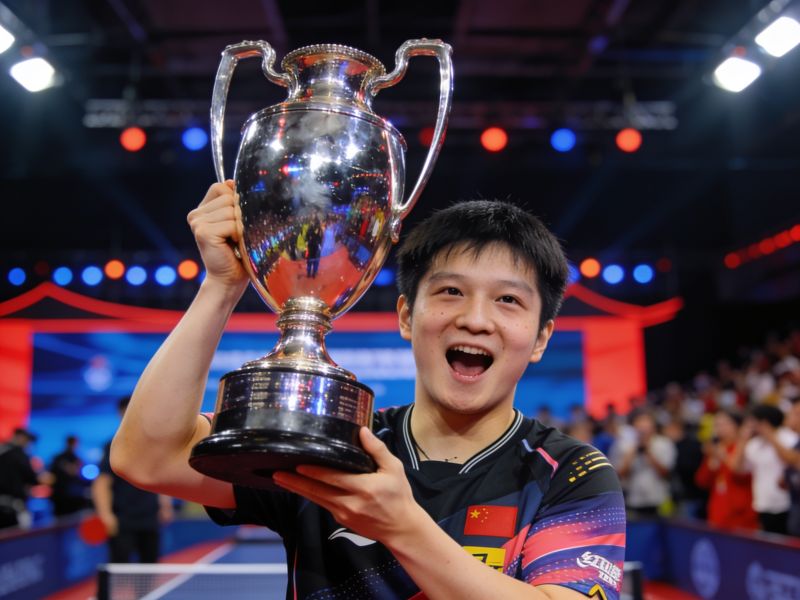
it was a demonstration of how small tactical choices can gradually control an elite match.The turning point came when Wang began reading Calderano’s service patterns more accurately. Instead of allowing the Brazilian to launch his first forehand, Wang stepped in and took several returns earlier, turning defense into immediate pressure. A few rallies ended with winners, but others were won through patience: Wang absorbed the first attack, redirected the ball wide and waited for Calderano to overreach. From the stands, the contrast was striking. Calderano played with visible intensity, often striking the ball with a full swing, while Wang appeared almost economical。conserving movement and energy for the moments that mattered. That contrast helped explain why Wang Chuqin defeats Hugo to win the championship became the dominant phrase in post-match coverage. The contest was aggressive, yet it was Wang’s control of tempo that separated the players.Calderano refused to fade. He changed the height and speed of his shots, moved closer to the table and produced several stretches in which Wang was forced into hurried blocks. The Brazilian’s response gave the final a sense of danger long after Wang had established an advantage. Every time Wang looked ready to pull away。Calderano found a heavier ball or a more daring angle. Still, Wang handled the pressure with the calm of a player familiar with major finals. He did not chase spectacular winners when a safe placement would do. He also avoided showing frustration after missed opportunities, turning back to his service routine almost immediately. In that phase, Wang Chuqin defeats Hugo to win the championship was secured through discipline rather than drama, even though the scoreboard suggested a much closer fight.The victory carries significance beyond one trophy. Wang has faced constant scrutiny since emerging as one of China’s most prominent players。
with every tournament judged against the standards of a nation that treats table tennis as a national craft. His performance against Calderano showed a more mature version of his game: quick hands remain central to his style, but his patience and match management have become just as important. For Calderano, the defeat was painful but hardly damaging to his reputation. He again showed that he can challenge the world’s best without abandoning his attacking identity. Fans leaving the arena were left with a final that felt competitive rather than predetermined, and with a result that will be repeated across headlines: Wang Chuqin defeats Hugo to win the championship. The phrase captures the outcome, but the match itself revealed the work behind it—careful preparation, emotional restraint and the ability to make the right decision when one point can change an entire final.