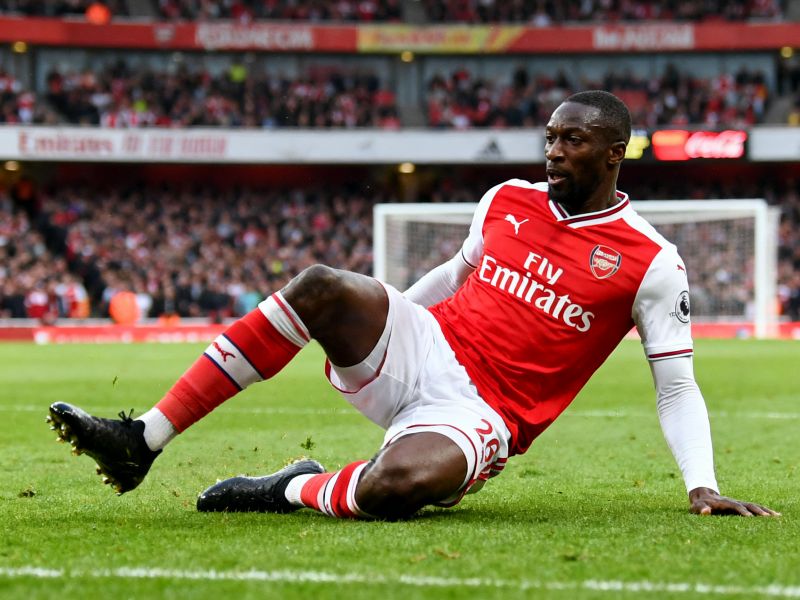
Kolo Touré rarely tops highlight reels. Yet the Ivorian defender's fingerprints are all over two of the most compelling stories in Premier League history: Arsenal's unbeaten 2003-04 season and Liverpool's emotional 2019 Champions League triumph. His game was never about spectacle. It was about the quiet, brutal efficiency of a man who understood that defending is less about the ball and more about the space you deny.When Touré arrived at Highbury in 2002, he was a wiry, unknown right-back from ASEC Mimosas. Within two seasons, Arsène Wenger had converted him into a centre-half—a move that raised eyebrows. Touré's first outing alongside Sol Campbell against Chelsea in 2004 was a masterclass in positional discipline. He didn't dive into tackles;he shepherded attackers into cul-de-sacs. That 2-1 win at Stamford Bridge felt like a statement. The Invincibles didn't just defend;they suffocated. Touré's partnership with Campbell produced 12 clean sheets in the league that season. Not bad for a makeshift defender.What made Kolo Touré special was his recovery pace. In an era when strikers like Thierry Henry and Ruud van Nistelrooy thrived on through-balls, Touré's acceleration over five yards was elite. I remember watching him chase down a seemingly lost cause against Everton in 2005—he covered 30 yards in under four seconds to block a shot that had 'goal' written all over it. That moment encapsulated his value: pure, reactive athleticism married to a defender's intuition. He wasn't the biggest or the strongest, but he was almost never beaten in a footrace. Opponents learned to stop testing him.His move to Manchester City in 2009 raised questions. Was he past his peak?
The answer came swiftly: Touré started 31 league games as City qualified for the Champions League for the first time. Then came Liverpool in 2013. Many saw it as a retirement lap. Instead, Touré became a cult figure at Anfield—not for his minutes, but for his professionalism. Jürgen Klopp later admitted that Touré's presence in training pushed younger defenders like Joe Gomez. The Ivorian played a crucial role in the 2015-16 Europa League run, notably in the semi-final against Villarreal. His leadership off the pitch?Teammates called him 'the uncle'—a steadying force in a chaotic dressing room.
International football offered Touré his most poignant chapter. He earned 120 caps for Ivory Coast and was part of the golden generation that finally won the Africa Cup of Nations in 2015. The penalty shootout victory over Ghana—after years of heartbreak—was a testament to his resilience. Touré missed a spot-kick in the 2006 final loss to Egypt;nine years later, he converted his. That narrative arc feels almost written for a screenplay. His brother Yaya often stole the headlines, but Kolo's defensive solidity allowed the midfielders to roam. Watch the 2015 final again: Touré made seven clearances and won every aerial duel in extra time. He was 34.Now a coach, Touré's legacy is quietly reshaping how we evaluate defenders. He never made a PFA Team of the Year—a glaring oversight. But ask any striker who faced him, and they'll tell you: Kolo Touré was the guy you didn't want to see on the team sheet. Not because he'd crunch you。but because he'd simply be there, every time, cutting off your angle. In an age obsessed with stats and xG, Touré's game was a reminder that defending is an art of anticipation, not reaction. His story deserves more than a footnote.